



Small Leak, Big Problems:
The First 24 Hours
A drip in the ceiling is never just a drip. Here is what to do while you wait for the crew — and what we do when we get there.
Water does not stay where it lands. That is the single most important thing to understand about a roof leak. By the time you see a stain on the ceiling, water has already traveled across the underside of your roof deck, soaked insulation, and found the path of least resistance through the framing. The wet spot you are looking at is the last stop, not the first.
That is why the first day matters so much. A leak caught in 24 hours is usually a flashing repair. The same leak caught in three weeks can mean replacing decking, insulation, and drywall.
The First Hour: Contain It
Before you call anybody, do these three things. They cost nothing and they routinely save homeowners thousands.
- Move what matters. Get furniture, electronics, and anything with sentimental value out from under the leak. Water follows joists — it may appear several feet from where it started.
- Catch the water. A bucket with a towel in the bottom stops the splashing. If water is pooling in a ceiling bulge, that bulge is holding several pounds of water.
- Kill the power in that room if water is anywhere near a fixture or an outlet. Not negotiable.
One thing not to do
Do not go up on the roof. Not during the storm, not right after. A wet roof is the single most dangerous place on your property, and there is nothing you can do up there that a roofer cannot do more safely tomorrow.
Hours 2 to 6: Document Everything
If you plan to file an insurance claim — and you should at least ask — the photos you take today are worth more than any inspection three weeks from now. Adjusters want to see the damage at its origin, not after it dried.
- Photograph the ceiling stain, the wall, the floor, and any damaged belongings.
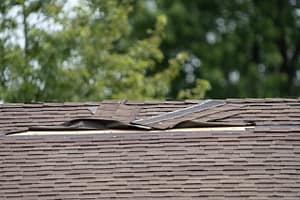
- Photograph the exterior from the ground: missing shingles, debris on the roof, anything visibly out of place.
- Write down the date and what the weather was doing. “Heavy wind and rain, Saturday night” is useful. “Sometime last month” is not.
Then call. If the leak is active, we treat it as an emergency — 24-hour response across Philadelphia and the surrounding areas. If it stopped when the rain stopped, it still needs an inspection, just not a 2 a.m. one.
A leak that dries out has not gone away. It has just stopped announcing itself.
What We Do When We Arrive
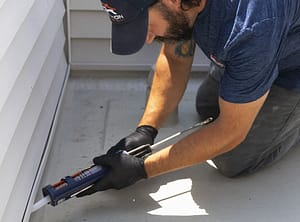
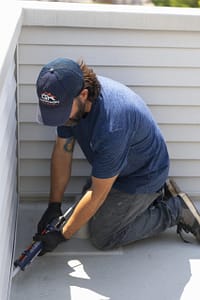
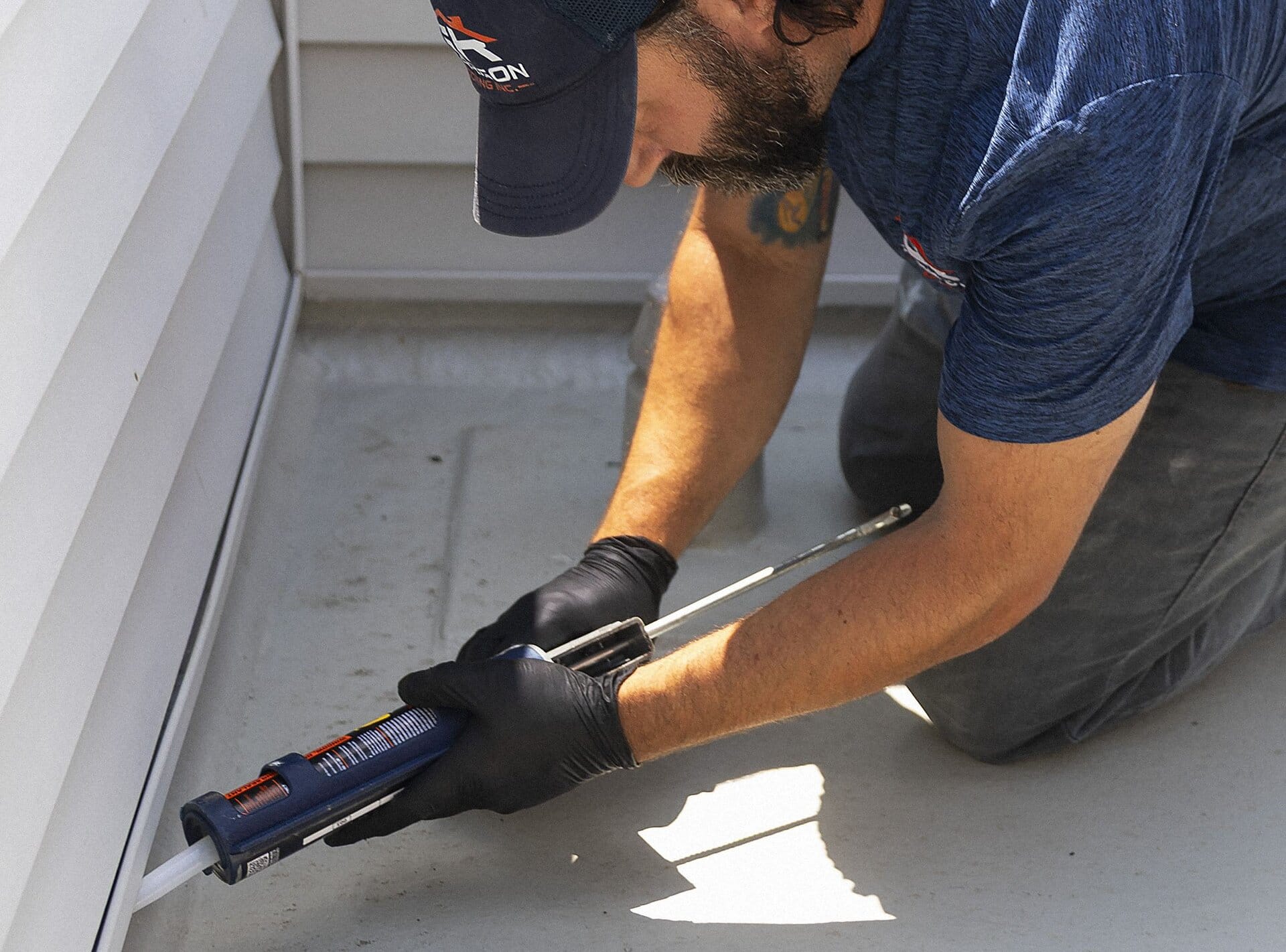
The first thing we do is not climb on your roof — it is stop the water. If conditions are unsafe or the storm is not finished, we tarp. A properly installed tarp buys you days of protection and turns an emergency into a scheduled repair.
Then we find the actual entry point. This is where most repairs go wrong. Patching directly above the ceiling stain is guessing, and guessing is why so many homeowners have “fixed” the same leak three times.
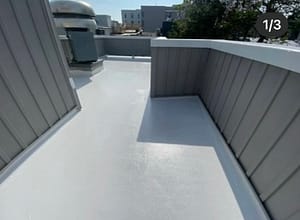
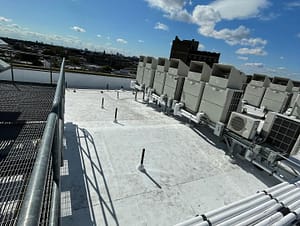
We use thermal-drone imaging to read temperature differences across the roof surface. Trapped moisture holds heat differently than dry material, so the drone shows us where water actually is — including the part you would never see from the ground or from a ladder. On flat and low-slope roofs, where water can travel ten feet before it drips, that is the difference between fixing a leak once and chasing it for a year.
Why the First Day Decides the Bill
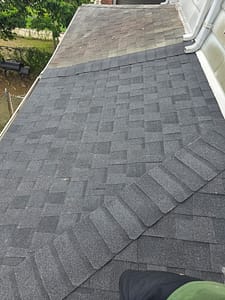
Here is the honest math. A pipe boot or a section of flashing is a small repair. Left alone through a few more rains, that same leak soaks the plywood deck beneath it. Wet decking is not a repair — it is a tear-off of that section, new sheathing, new underlayment, and new shingles. Add saturated insulation and mold remediation and you are into a different category of job entirely.
None of that happens on day one. It happens over weeks of nobody looking.
The straight answer
When we inspect, you get photos and a written report of what we actually found — and if a repair will hold, we will tell you so, even though a replacement is the bigger check. That is the whole point of how we work.
If You Are Reading This With a Bucket Out
Call 267-977-6452. Tell us what you are seeing and how fast it is coming in. We will get you protected first and sort out the rest after the water stops.
Free & No-Obligation
Get a Straight Answer
About Your Roof
Photos, a written report, and an honest read on what it actually needs — from a GAF Certified crew that has been on these roofs for 20+ years.